Delivery Route Optimization System Trends for 2026
Last-mile delivery has become one of the most complex and costly parts of logistics. Customers expect accurate ETAs, flexible delivery windows, real-time tracking, and dependable service—even as fleets face rising fuel costs, driver shortages, congestion, and tighter sustainability targets.
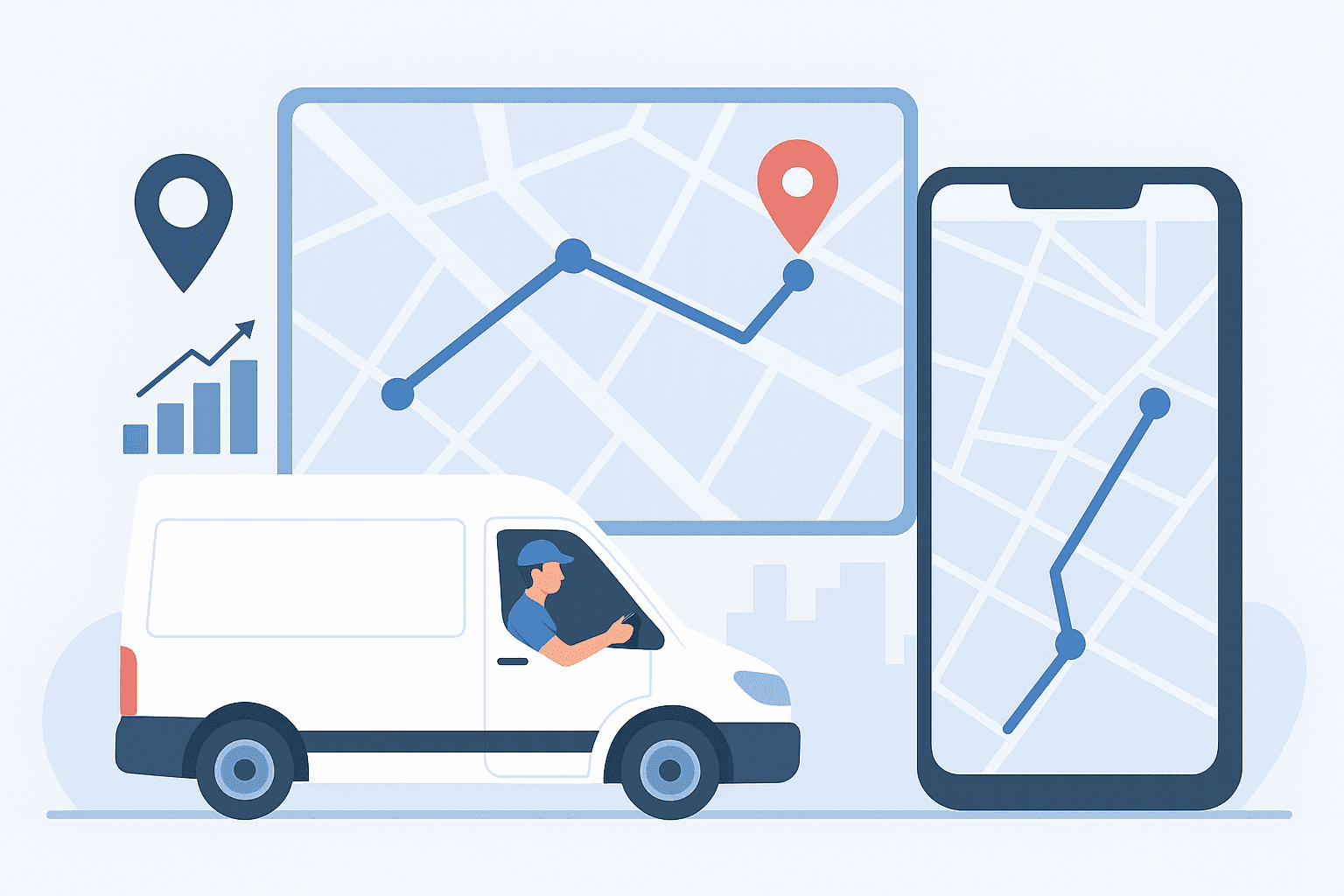
A modern delivery route optimization system helps businesses turn those pressures into a competitive advantage. Rather than simply finding the shortest route between stops, today’s platforms balance vehicle capacity, driver skills, traffic conditions, time windows, delivery priorities, service rules, and operating costs.
In 2026, route optimization is moving from a back-office planning tool to a connected operational system. Delivery routing software trends shaping last-mile operations show how delivery operators, fleet managers, and logistics leaders are planning for the road ahead.
AI Is Making Route Plans More Adaptive
Traditional routing tools typically create a plan at the beginning of the day. While useful, static routes quickly become inefficient when reality changes. A customer may not be available, a vehicle may break down, traffic may worsen, or an urgent order may need same-day fulfillment.
AI-enabled route planning is helping teams respond to those disruptions faster. Instead of requiring planners to rebuild every route manually, the system can assess current routes, available drivers, stop constraints, and incoming orders to recommend the most practical adjustment.
From shortest distance to best operational outcome
The shortest route is not always the most profitable route. A delivery route optimization system increasingly evaluates multiple factors at once, including:
- Live and historical traffic patterns
- Delivery time windows and promised service levels
- Vehicle load capacity, dimensions, and refrigeration requirements
- Driver work hours, breaks, and certifications
- Stop duration estimates
- Toll roads, restricted zones, and road closures
- Priority customers and urgent delivery requests
- Fuel, labor, and vehicle operating costs
This approach supports better decisions than distance-only routing. For example, a slightly longer route may reduce late deliveries by avoiding a predictable congestion area or better balance workload across available drivers.
How to adapt
Businesses should prioritize software that can re-optimize routes during the day without creating confusion for drivers or customers. Dispatchers also need clear controls: automation should recommend smart changes, but operations teams should be able to approve, override, or lock routes when service commitments require it.
Scheduling Delivery Route Optimization Software Is Becoming Essential
Routing and scheduling can no longer operate as separate processes. A route may look efficient on a map but fail in practice if the delivery appointment, driver shift, service time, or vehicle availability has not been considered.
That is why scheduling delivery route optimization software is becoming a core investment for delivery businesses. The strongest platforms combine order planning, route building, driver assignment, shift management, and customer communications in a single workflow.
Better scheduling starts before the vehicle leaves
Effective scheduling software can group orders by geography, capacity, promised delivery date, product handling needs, and driver availability. It can also identify whether a business has enough fleet resources to meet demand before dispatch starts.
This gives managers a chance to solve capacity problems early. They can add a vehicle, move lower-priority stops, use a delivery partner, adjust appointment windows, or notify customers proactively instead of reacting after routes fall behind.
What to look for in scheduling capabilities
When evaluating route and scheduling tools, look for features such as:
- Recurring route templates for regular service areas and repeat customers.
- Time-window management that accounts for realistic arrival and service times.
- Driver and vehicle assignment rules based on skills, hours, capacity, and equipment.
- Multi-depot planning for businesses that dispatch from more than one location.
- Bulk order import and integrations with order management, ecommerce, ERP, or warehouse systems.
- Exception alerts for late-risk stops, overloaded vehicles, or unassigned deliveries.
Integrated scheduling improves resource utilization while protecting the customer experience. It also reduces the reliance on spreadsheets, phone calls, and dispatcher knowledge that can be difficult to scale.
Real-Time Visibility Is Now a Customer Service Standard
Route planning once focused mainly on internal efficiency. In 2026, visibility is equally important. Customers want to know when a driver will arrive, whether the delivery is on track, and what to do if plans change.
A connected route optimization software logistics solution can share status updates between dispatchers, drivers, customers, and support teams. GPS-based tracking, automated ETA updates, proof of delivery, and delivery notifications help create a smoother experience across the full delivery journey.
Visibility reduces avoidable service costs
Without real-time delivery data, customer support teams spend time answering “Where is my order?” calls. Dispatchers may call drivers repeatedly for updates, while customers wait without reliable information.
A route platform with live tracking can reduce those manual touchpoints. More importantly, it gives operations teams early warning when service is at risk. If a driver is delayed, the business can update the customer before a complaint occurs.
Driver apps are central to execution
The driver mobile app has become a critical part of route optimization. It should provide drivers with a clear stop sequence, navigation support, customer notes, contact details, and proof-of-delivery tools.
The best driver experiences avoid overloading teams with unnecessary alerts. Simple workflows for scanning, signatures, photos, failed-delivery reasons, and status updates improve data quality without slowing down the route. For more on these connected capabilities, see delivery driver routing software trends for 2026.
Free Delivery Route Optimization Software Is Driving Smarter Buying Decisions
Many small businesses begin their digital routing journey with a spreadsheet, consumer navigation app, or free delivery route optimization software. These options can be useful for testing basic multi-stop planning, especially for owner-drivers or teams with a limited number of daily orders.
However, free tools often have restrictions around stop limits, route complexity, driver count, optimization frequency, integrations, customer notifications, and reporting. They may be a practical starting point, but they rarely offer the controls needed for growing delivery operations.
When free tools make sense
A delivery route optimization software free option can be appropriate when a business:
- Runs a small number of stops per day
- Has one vehicle or a very small fleet
- Does not require advanced delivery windows
- Does not need proof of delivery or customer tracking
- Wants to validate the benefits of route planning before investing
When to move to a dedicated platform
As order volume rises, the hidden costs of manual processes become more visible. Dispatchers spend more time planning. Drivers may receive unbalanced routes. Customers receive inconsistent ETAs. Managers lack reliable performance data.
A dedicated delivery route optimization system is often justified when the business needs multi-driver coordination, ongoing route changes, branded customer notifications, operational reporting, delivery confirmation, or integrations with existing systems. The right question is not whether software has a monthly cost; it is whether inefficient miles, late deliveries, and manual planning are costing more. Businesses comparing entry-level options can also review free delivery planning software trends before deciding when to upgrade.
Sustainability Is Shaping Routing Decisions
Sustainability targets are increasingly influencing fleet and delivery strategy. Route optimization directly supports lower fuel use and emissions by reducing unnecessary mileage, minimizing idle time, improving load utilization, and limiting repeat delivery attempts.
For electric vehicle fleets, route planning becomes even more specialized. Planners must consider battery range, payload effects, charging availability, charging time, elevation, weather, and the ability to return to a depot or charging location.
EV-ready routing will become more important
A delivery route optimisation software platform should help managers model realistic vehicle constraints rather than treating all vehicles the same. An electric van may be ideal for dense urban routes, while a larger combustion or hybrid vehicle may remain more suitable for long-distance or high-payload runs.
The goal is not simply to electrify every route immediately. It is to match the right vehicle to the right work while maintaining service performance and controlling total operating costs.
Data-Driven Performance Management Is Replacing Guesswork
Route optimization produces valuable operational data. Fleet managers can use it to understand planned versus actual distance, delivery completion rates, route duration, stop productivity, on-time performance, failed-delivery reasons, and driver workload.
This information helps businesses move beyond anecdotal decisions. Instead of assuming that a territory needs another driver or vehicle, managers can review route demand, utilization patterns, and service results.
Metrics worth tracking
Focus on a practical set of metrics that connect route performance to business outcomes:
- Cost per delivery and cost per mile or kilometer
- On-time delivery rate
- Planned versus actual route duration
- Deliveries completed per driver hour
- Average stop time
- First-attempt delivery success rate
- Empty miles and vehicle utilization
- Customer delivery satisfaction and complaint trends
Review these metrics regularly, but avoid using them in isolation. A route with fewer miles is not automatically better if it creates missed delivery windows or puts unsafe pressure on drivers.
Choosing the Right Delivery Route Optimization System
The market includes tools for local courier teams, retailers, field service providers, distributors, and enterprise fleets. The best fit depends on the size and complexity of the operation, not just the number of features listed on a product page.
Before selecting a platform, map your current workflow from order intake through proof of delivery. Identify where delays, manual work, poor communication, and avoidable costs occur. Then prioritize the capabilities that solve those specific problems.
A scalable solution should make it easier to plan routes, manage dispatch, keep drivers informed, communicate with customers, and analyze outcomes from one reliable source of data.
The Future of Delivery Operations Is Connected and Flexible
The defining trend for 2026 is clear: delivery routing is no longer a static map exercise. A modern delivery route optimization system connects scheduling, fleet capacity, driver execution, customer communication, and performance analytics in real time.
Businesses that adopt intelligent planning tools can build more resilient delivery operations while improving service and controlling costs. Start by assessing your current planning process, testing where automation can make the biggest difference, and choosing software that can grow with your fleet.
Cooriroo helps delivery businesses coordinate routes, drivers, and daily operations with greater clarity. Explore how a modern fleet management platform can help your team deliver more efficiently, adapt faster, and keep customers informed at every stop.