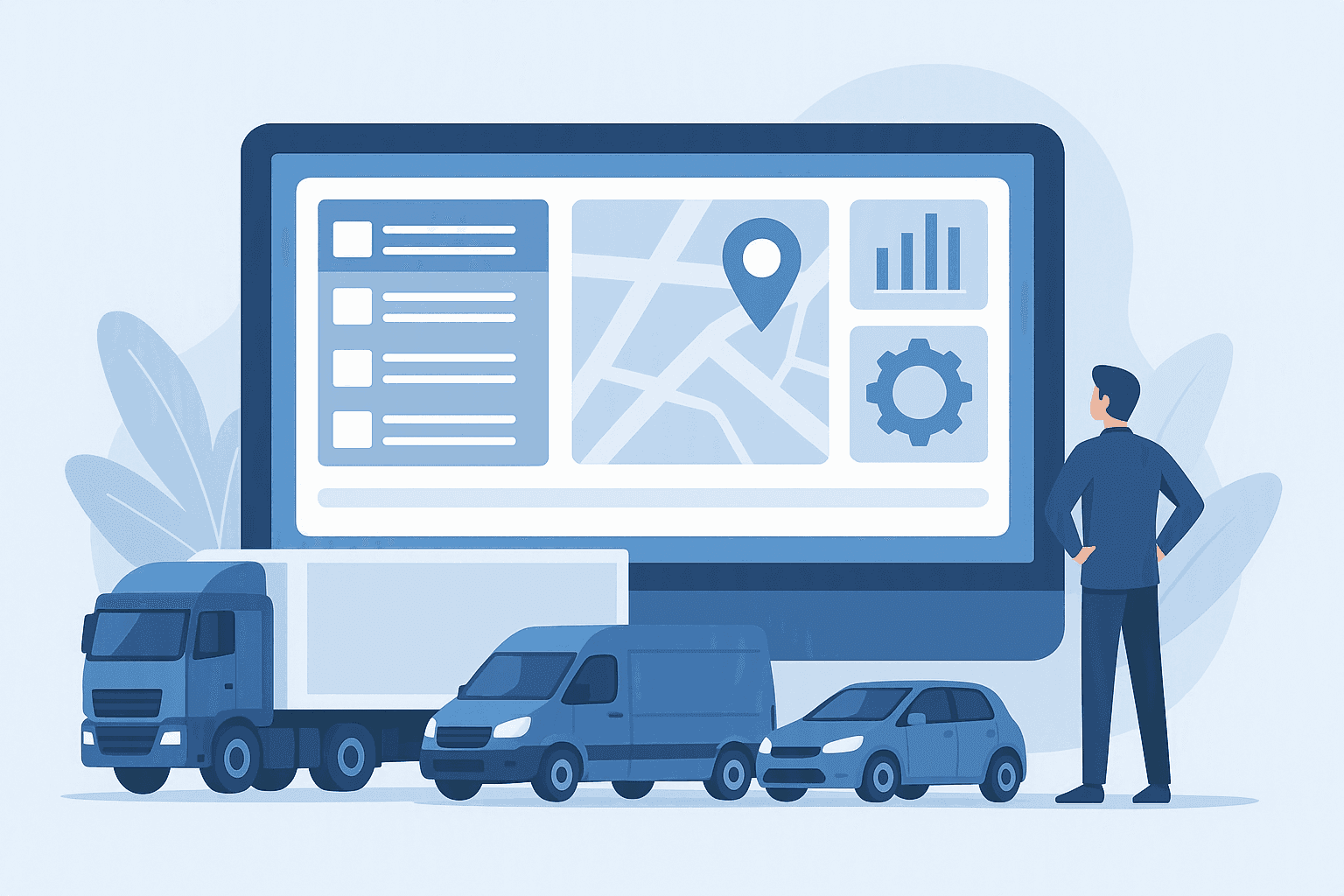
AI Fleet Management in 2026: No Hardware Required
Fleet Management Without Hardware
AI changed what a fleet platform has to be. Setting up fleet tracking no longer starts with a purchase order for devices. It starts with an app on the phone the driver already carries.
That is not a convenience. It moves an entire budget line.
What a hardware fleet costs before it tracks anything
Run the numbers on a hundred vehicles. Device cost. Fitting labour, per vehicle. The hours each vehicle spends off the road while it is fitted. A monthly connectivity fee per unit.
Then year two starts. Units fail. Vehicles are sold, so units are removed and refitted. Boxes are stolen. Warranties expire.
None of that is software. It is the toll you pay to reach the software.
Cooriroo removes the line entirely. No boxes, no wiring, no installers. Your budget stays in software. Three vehicles or three thousand: the platform does not change. That is the point of working without hardware.
How fleet tracking without a GPS device works
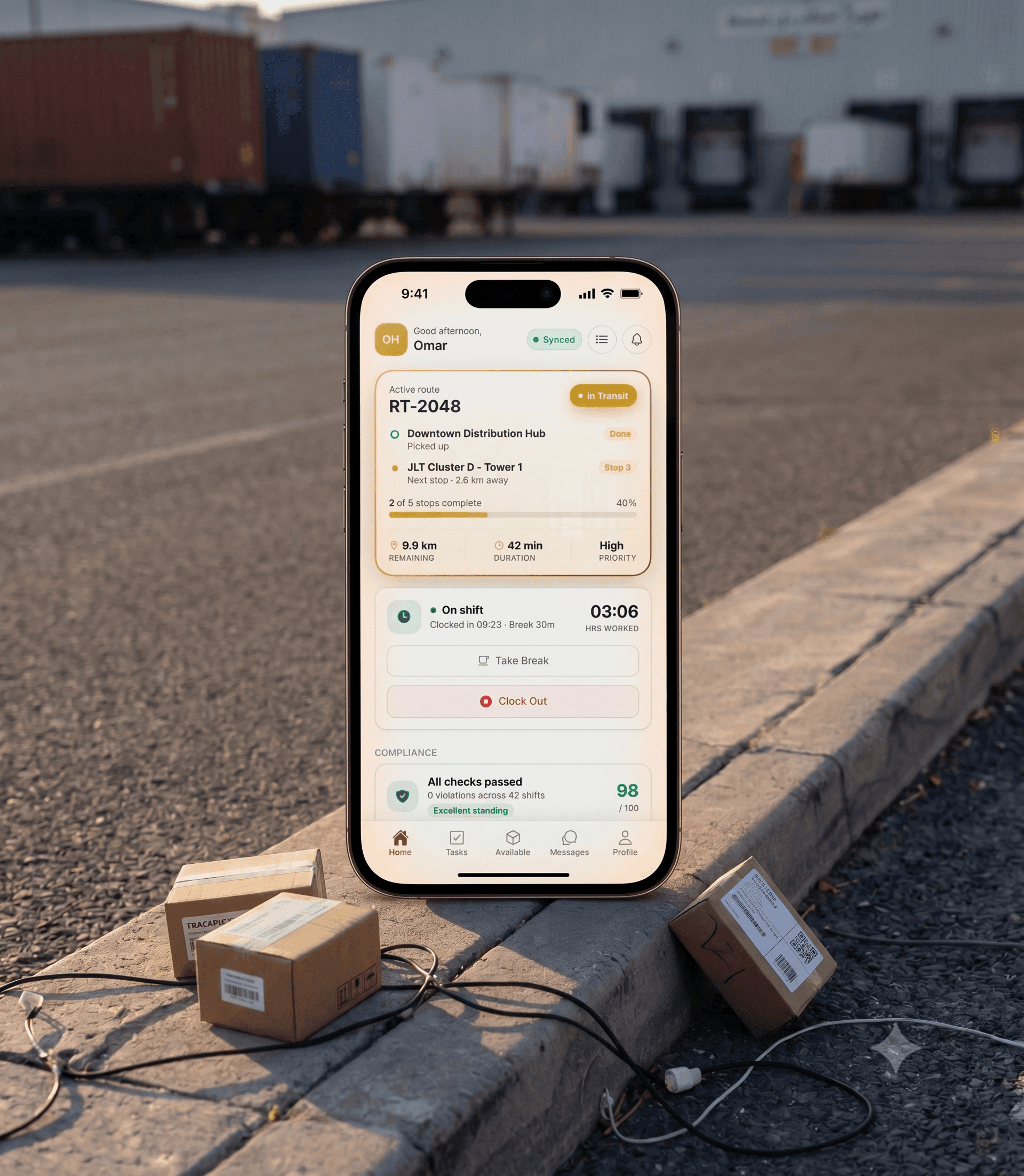
Drivers use the phone they already carry. Managers use a browser. Nothing is fitted to the vehicle, and there is nothing to steal.
The usual objection arrives here: can a phone really be trusted? We do not answer that one ourselves. Dubai's Roads and Transport Authority ran its own security review and put live passenger operations on the platform, inside their own tenant. If we can clear a government security review, we can clear yours.
You will also read, on pages selling the hardware-first way, that a phone-based platform cannot give you live position. It can, and it does. The difference was never where the position comes from. It is what happens to it afterwards.
Tracking does not stop at the dot on the map
Knowing where the vehicle is was always the easy part. The hard part is everything the dot connects to. One core engine runs the vehicles, the field teams, the goods and the work.
- Movement, measured: harsh braking, speed, idle time and stop behaviour, scored with no device in the vehicle.
- Proof: photo, signature, timestamp and location attached to the stop itself. A driver saying it was delivered is not a record that it was.
- Customer data: who was visited, when and under what conditions stays inside the operation, not in WhatsApp and memory.
- Cost: every trip has a cost, and most fleets find out a month late.
AI agents, not dashboards
The last generation of software reported the work back to you. This one does the work.
Cooriroo builds tomorrow's trips, recalculates the route when the road changes, reads the fuel bill from a photograph, answers a question about your fleet in plain language and writes the report itself. Instructions reach each driver in their own language.
You are not hiring someone to watch a dashboard. The platform does what the dashboard was asking you to do.
Expenses: the end of "why did you take a taxi?"
This is the part most fleet software never touches.
Staff fill in expense forms. They tick whether they took a taxi or the bus. Finance comes back a fortnight later to ask why that trip was not made on public transport. All of it is the same journey, captured twice, badly.
In Cooriroo the movement is already recorded. The same check-in that proves a stop also proves a shift and carries its cost. Cost per trip appears by vehicle, by driver and by customer, without anyone filling in a form or defending a decision from memory.
Route optimisation and time-critical work
As route optimisation software, Cooriroo calculates the most efficient and lowest-cost route, then rebuilds it when an ad-hoc stop appears mid-day.
In time-critical operations that is more than a saving. In medical and organ transport logistics, cold chain distribution and ready-mix concrete, the right route is the job itself.
For field sales and delivery teams the gain shows up in the working day: no ringing round to ask where people are, no manual route planning, no collecting reports in the evening.
Not a package. A platform that bends to you
Cooriroo is not a boxed product. Your operation is configured on the same proven core.
Should it talk to your existing ERP? It can. Should a button carry your company's own wording? It will. Is there a flow in your industry that standard software does not cover? We build it as a scoped work package, on the same core, never as a separate product and never as a fork.
We configure. You do not compromise.
Which operations this is built for
Any business with a moving vehicle, a driver and stops.
- Waste and municipal services: routes that adapt to what is actually full, and a record for every collection.
- School and staff transport: thousands of stops, one audit trail.
- Last mile and courier: every drop with proof, every route recalculated before the road changes.
- Food and beverage distribution: daily drops live, fuel bills read from a photo, instructions in every driver's language.
- Field sales and technical service, including small fleets.
- Too small for hardware trackers is exactly who the phone-based version was built for.
What does fleet management software cost in the 2026?
Price depends on how many users you have and how much AI your operation uses. The structure is simple: one setup fee, then per user, monthly. Add or remove users at any time.
When you compare, count the hardware side properly: devices, fitting, failures, connectivity, removal and refitting when a vehicle changes hands. None of it exists here.
You also decide where your data sits: in the cloud, or on-premise inside your own tenant. Full export, any time.
The team behind Cooriroo
Cooriroo is built by a team of engineers led by Bassem Fawaz, whose background includes integration programmes for Mercedes-Benz, Volkswagen Financial Services, Schindler and DB Schenker. Security review, audit trail and uptime were the normal bar for that work, not an upgrade requested later.
The people who build the platform are the people you talk to. No reseller in between. Talk to an engineer, not a call centre.
Frequently asked questions
How do I track field technicians without OBD devices?
The app on the driver's phone reports position, speed and stop behaviour, and the platform turns that into trips, routes and cost. Nothing is fitted to the vehicle.
Do I need GPS hardware for fleet tracking?
No. Hardware buys you a signal. Everything you actually manage, the trip, the proof, the shift and the cost, comes from what the platform does with that signal.
Our fleet is small. Is this worth it?
Three vehicles or three thousand: the platform does not change. Without hardware there is no minimum scale to justify.
We already have a system. Why change?
Most of them stop at the dot on the map. Ask yours what a trip cost you last week.
Where does our data go?
Wherever you say. Cloud, or on-premise inside your own tenant, with full export at any time.
Which countries does Cooriroo serve?
The platform operates across the UAE, Saudi Arabia, Türkiye and Germany, and it is not region-locked. Interface language, address formats and reporting are configured per country, so a fleet in Ankara and a fleet in Dubai run on the same core without either one being treated as an exception.
Start with a free trial on your own operation
Live in days, with nothing fitted to a vehicle, and the person answering your questions wrote the system.