Route Planner App for Delivery Drivers: 2026 Trends
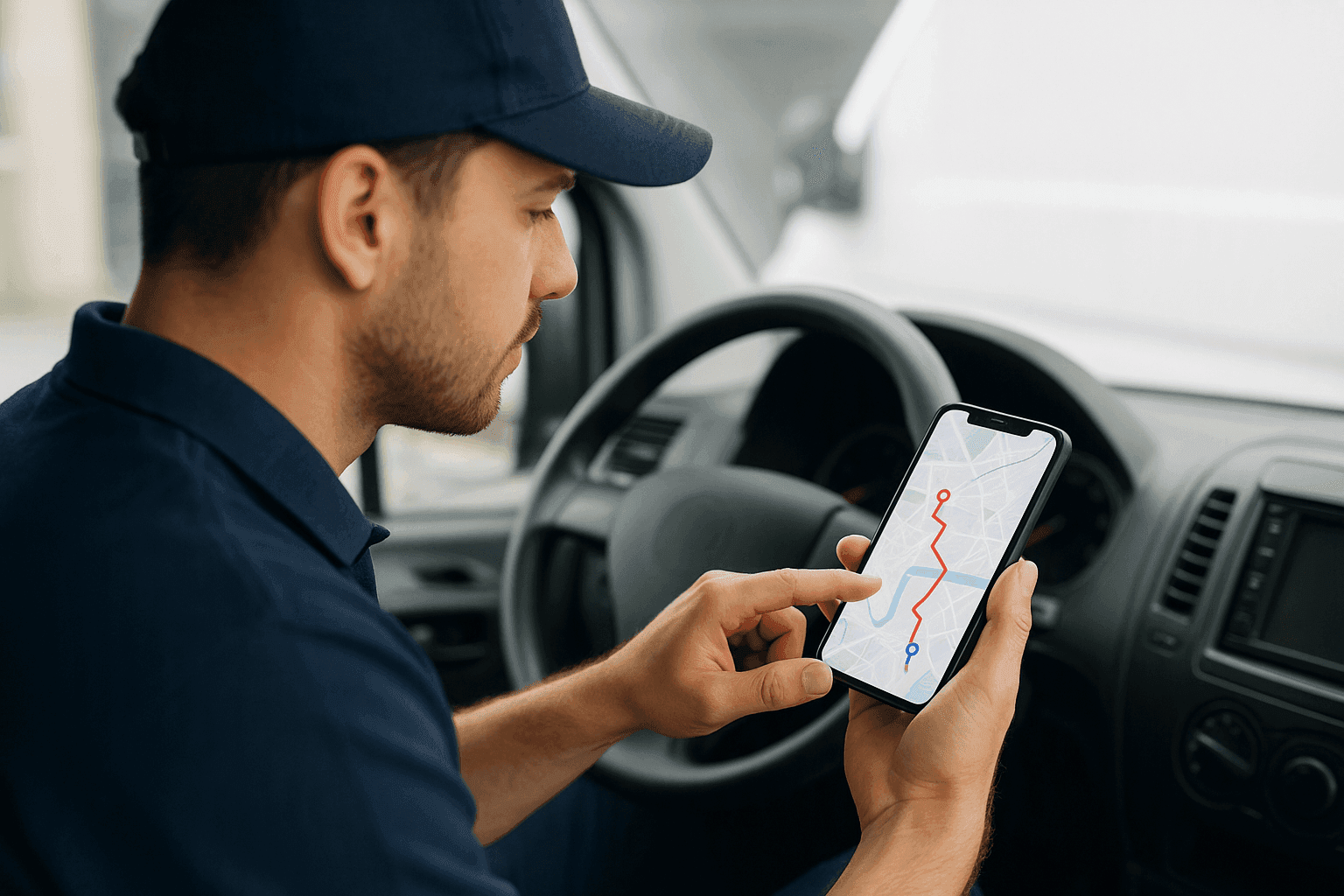
Delivery operations have become less forgiving. Customers expect accurate ETAs, flexible delivery windows, live updates, and fast resolution when a stop fails. Meanwhile, drivers face traffic, parking constraints, multi-drop schedules, vehicle limits, and constant route changes.
That is why a route planner app for delivery drivers is no longer simply a navigation tool. In 2026, it is becoming the operational layer that connects dispatchers, drivers, customers, and delivery data in real time.
For courier companies, local delivery businesses, retailers, field service teams, and independent drivers, the right delivery route planner can reduce manual planning, create more reliable routes, and provide the visibility needed to scale. Here are the trends defining the modern delivery planning landscape—and how businesses should respond.
AI-Powered Route Optimization Is Becoming Practical
The most important shift in route planning is the move from static route sequencing to dynamic, constraint-based optimization. A basic maps delivery route planner can show a driver where to go. A delivery route optimization app determines the most efficient order to complete many stops while accounting for real operating rules.
Modern systems can evaluate variables such as:
- Delivery time windows
- Road distance and estimated travel time
- Live or historical traffic patterns
- Vehicle capacity and load weight
- Driver shift length and break rules
- Service time at each stop
- Driver territories and skills
- Priority orders and same-day requests
- Restricted roads, tolls, and vehicle dimensions
This matters because the shortest route is not always the fastest or most profitable route. A multi stop delivery route planner should balance time, distance, capacity, and customer commitments—not just arrange pins in a convenient order. These capabilities build on the shift toward AI and real-time planning covered in delivery route optimization software trends.
What this means for delivery businesses
Businesses should look beyond simple route ordering. The best delivery route planner app should let planners set rules that reflect how their operation actually works. For example, a refrigerated vehicle may need to serve specific temperature-sensitive orders, while a driver with local access credentials may be better suited for gated or secure locations.
AI-assisted recommendations are especially useful when dispatch teams manage hundreds of stops. However, human control remains essential. Dispatchers need the ability to review a proposed plan, lock specific deliveries, adjust priorities, and override a route when local knowledge matters.
Real-Time Replanning Is Replacing Fixed Daily Routes
Traditional delivery planning often followed a rigid pattern: create routes in the morning, send drivers out, and hope the plan holds. That approach fails when customer requests, failed deliveries, vehicle issues, or traffic disruptions appear during the day.
The emerging standard is continuous route management. A route planner delivery app can receive new orders, identify capacity on active routes, and help dispatchers decide whether to assign the stop, defer it, or create a new run.
Events that should trigger route review
A capable online delivery route planner should help teams react to common disruptions, including:
- A customer changes their delivery availability.
- A driver reports a vehicle breakdown or delay.
- Traffic conditions threaten a time-window commitment.
- A high-priority same-day order enters the system.
- A stop fails because the recipient is unavailable.
- A driver completes stops significantly faster or slower than planned.
Real-time replanning does not mean constantly changing every driver’s schedule. Excessive changes can confuse drivers and frustrate customers. Instead, the goal is controlled adjustment: update only the routes affected by a disruption and communicate the change clearly.
For a multi delivery route planner, this capability can protect service levels without requiring a dispatcher to rebuild an entire delivery plan manually.
Multi-Stop Planning Must Reflect Last-Mile Reality
Multi-drop delivery is where route planning generates some of its greatest value—and where weak tools often fall short. A multi drop delivery route planner must account for more than a list of addresses.
In dense urban areas, a driver may spend more time finding parking, entering buildings, or locating recipients than driving between stops. In rural areas, long distances and poor network coverage can shape the route. In suburban delivery operations, time windows and clustered neighborhoods often determine the best sequence.
Better stop data creates better routes
A parcel delivery route planner becomes more useful when each stop contains practical delivery intelligence. Useful fields include:
- Apartment, suite, or unit number
- Gate codes and access instructions
- Safe-drop preferences
- Recipient contact details
- Delivery time window
- Package count, weight, or volume
- Required signature or ID verification
- Notes from prior attempts
- Parking or building-entry guidance
This information helps drivers complete stops correctly the first time. It also improves future planning because the system can use realistic service times rather than assuming every delivery takes the same amount of time.
A best courier route planner app should reduce the cognitive load on drivers. Instead of switching among navigation apps, paper manifests, messaging tools, and delivery notes, drivers should have one mobile workflow that tells them what to do next.
Proof of Delivery Is Now a Core Route Planning Feature
A delivery planner app should not stop at route creation. The route is only valuable if the business can verify what happened at every stop.
Proof of delivery features provide operational accountability and help resolve customer disputes. Depending on the type of delivery, this may include signatures, photographs, barcode scans, timestamps, GPS location stamps, recipient names, and reason codes for failed attempts.
Why proof of delivery affects route performance
Proof of delivery data improves more than compliance. It gives dispatchers insight into recurring issues, such as buildings with frequent failed deliveries, stops that take longer than planned, or addresses where drivers repeatedly need additional instructions.
Over time, delivery teams can use that information to:
- Improve address records and delivery notes
- Adjust planned service times
- Identify repeat failed-delivery locations
- Reduce customer service calls
- Support claims and billing documentation
- Improve driver coaching and safety processes
The best app for delivery route planning connects planning, execution, and completion data in one platform. That closed loop makes route plans smarter over time.
Customer Visibility Is Shifting From a Nice-to-Have to an Expectation
Customers increasingly expect the same visibility from local or regional delivery providers that they receive from major ecommerce brands. They want to know when a delivery is coming, whether it is delayed, and what to do if they will not be available.
A modern delivery driver route planner can support proactive communication through ETA notifications, tracking links, delivery status updates, and confirmation messages. These capabilities are part of the wider evolution of last mile delivery tracking software. These tools reduce the burden on customer service teams while giving recipients more confidence in the delivery process.
Better communication also protects driver productivity
When customers receive accurate information, they are more likely to be prepared for the delivery. That can reduce waiting time, failed handoffs, and calls to the driver.
The key word is accurate. Sending a generic “out for delivery” message is useful, but sending an ETA that ignores route changes can create disappointment. Businesses should prioritize systems that update customers when delivery conditions materially change.
Free Route Planning Tools Are Useful—but Often Limited
Many operators begin their search with phrases such as free route planner app for delivery drivers, delivery route planner free, or best free delivery route planner app. Free tools can be helpful for solo drivers, new businesses, and teams testing a route-planning process.
A free delivery route planner app may offer address imports, basic stop sequencing, navigation links, or limited daily route optimization. These capabilities can be a meaningful improvement over manually arranging stops.
However, free tools often have restrictions around stop counts, driver numbers, route history, live tracking, proof of delivery, integrations, or advanced optimization constraints. As an operation grows, these limitations can create manual work that offsets the original savings.
When to move beyond a free tool
Consider a purpose-built route planning app for deliveries when your business needs:
- Multiple drivers or dispatchers
- Daily multi-stop routes at scale
- Live driver status and ETA tracking
- Customer delivery notifications
- Proof of delivery capture
- Route performance reporting
- Integration with order management or ecommerce platforms
- Driver workload balancing
- Flexible delivery zones and time windows
The best free route planner app for delivery drivers is the one that fits a small operation without adding friction. The best delivery route planner for a growing business is usually the platform that prevents operational bottlenecks before they become expensive.
Integration Is Becoming Essential for Scalable Delivery Operations
Manual data entry creates avoidable errors. If dispatchers must copy addresses from spreadsheets, ecommerce systems, inboxes, and messaging apps into a route planner, mistakes are inevitable.
Leading platforms now focus on integrations and data flow. Orders should move into the planning system automatically, while route status and proof-of-delivery data should flow back to customer service, billing, and order-management tools.
For delivery teams, integration can improve:
- Address accuracy
- Dispatch speed
- Status visibility
- Invoice validation
- Customer communication
- Performance reporting
- Exception management
A multi stop delivery route planner should fit into the operational stack rather than becoming another isolated tool. Before selecting software, businesses should map where orders originate, who plans routes, how drivers receive work, and where completion data needs to go. This connected approach is central to modern last mile delivery management software.
Driver Experience Will Influence Adoption and Retention
Even the fastest delivery route planner will fail if drivers find it difficult to use. Drivers need clear routes, intuitive stop details, reliable navigation, and a simple way to report exceptions.
The best app to plan delivery route workflows should minimize screen taps and avoid forcing drivers to enter repetitive information. Mobile interfaces should work well in the field, support offline access where needed, and make it easy to complete a stop safely.
Build driver feedback into your rollout
Before deploying a new route planner deliveries solution across the fleet, involve drivers in testing. Ask them whether address details are clear, whether the stop sequence makes practical sense, and whether exception reporting is fast enough during a busy shift.
Driver feedback often reveals the gap between an efficient route on a map and an efficient route in the real world. This input can improve adoption, route quality, and morale.
How to Choose the Best Delivery Route Planner
There is no single best delivery route planner app for every operation. The right choice depends on delivery volume, service area, fleet size, order types, and customer expectations.
Use this checklist when evaluating a delivery route planner app:
- Optimization quality: Can it optimize routes using your actual constraints?
- Multi-driver support: Can it balance work across drivers and vehicles?
- Real-time control: Can dispatchers manage new orders and disruptions?
- Driver usability: Is the mobile workflow simple and dependable?
- Customer communication: Does it support accurate ETAs and notifications?
- Proof of delivery: Can drivers capture the evidence your business requires?
- Integration options: Does it connect to your existing order and business systems?
- Reporting: Can you measure on-time performance, route efficiency, and exceptions?
The Future of Delivery Planning Is Connected and Adaptive
The route planner app for delivery drivers is evolving into a central delivery operations platform. Businesses that still rely on static spreadsheets, disconnected navigation tools, and manual customer updates risk slower dispatch, inconsistent service, and limited visibility.
The opportunity is not simply to find the fastest delivery route planner. It is to create a delivery workflow that adapts to real-world conditions, supports drivers, informs customers, and gives managers reliable performance data.
Cooriroo helps delivery businesses plan smarter routes, manage multi-stop operations, keep drivers connected, and improve visibility from dispatch to proof of delivery. Explore how a modern delivery route optimization app can help your team deliver more efficiently—without adding complexity.