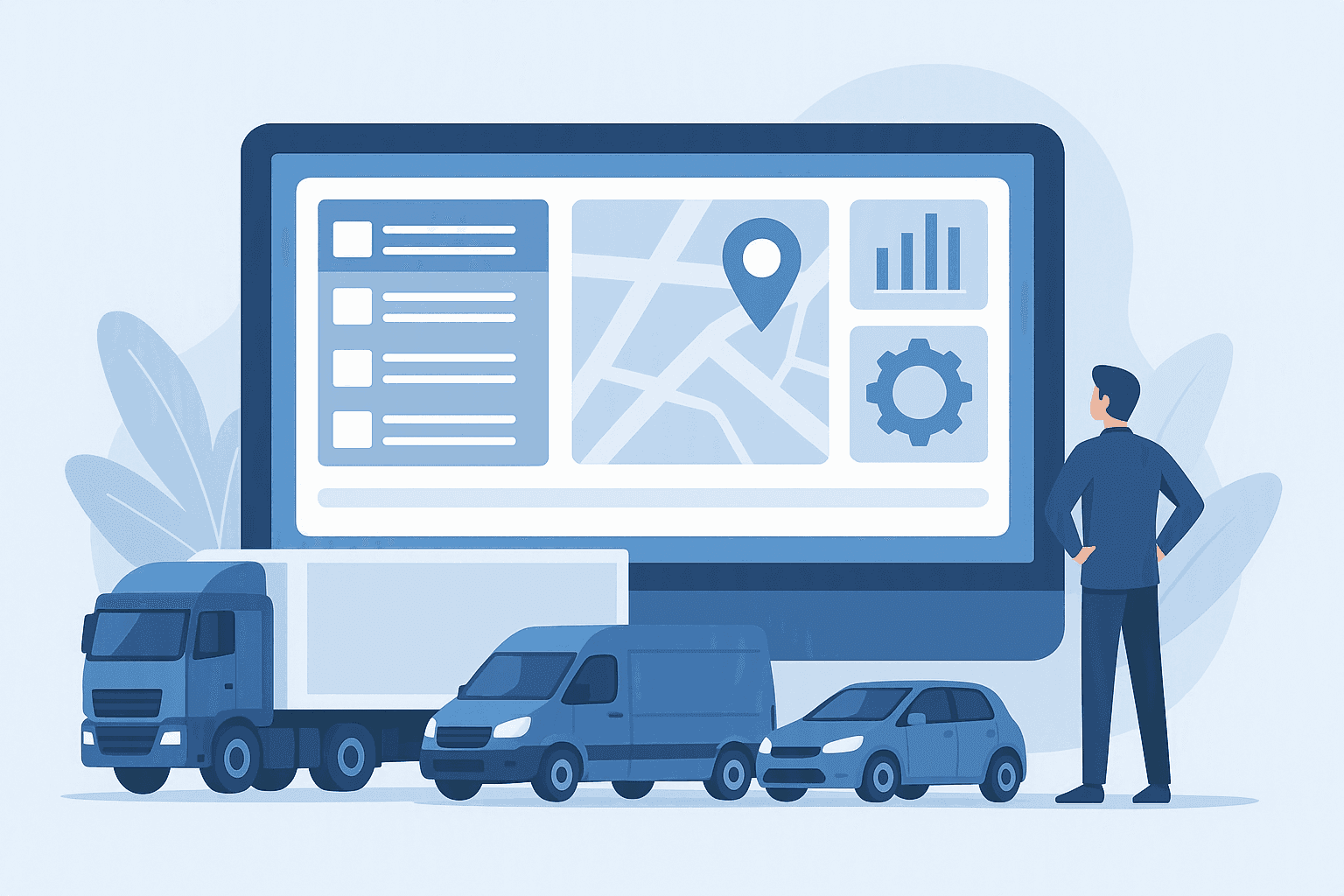
Top Trends Shaping Delivery Service Partner Operations in 2026
Introduction
The Delivery Service Partner program has spent seven years growing from an experiment into a global network of thousands of small business owners. In 2026, the program is going through its biggest shift yet. A major capital investment, a higher wage floor for drivers, new AI tools built directly into the DSP experience, and margins that no longer forgive an inefficient operation the way they once did. The DSPs pulling ahead this year aren't the ones working harder. They're the ones running their business less like a delivery company and more like a technology-driven logistics firm. Here are the trends actually shaping DSP operations in 2026, and what each one means for owners on the ground.
1. Thin Margins Force DSPs to Operate Like Tech Companies, Not Delivery Companies
The easy-growth years of the DSP program are over. Rising per-piece rates have arrived alongside a mandatory wage floor increase, pushing driver pay into a national range that significantly raises the largest line item on a DSP's books. That combination means the businesses that survive 2026 aren't the ones simply moving more packages, they're the ones running every part of the operation with the discipline of a tech-enabled logistics firm rather than a traditional delivery business.
- Every cost center under scrutiny: fuel, maintenance, driver hours, compliance
- Margin protection now depends on operational efficiency, not just volume
- Owners increasingly treating data and software as core infrastructure, not overhead
Business takeaway: If your operation is still being run on instinct and spreadsheets, the margin for error just got smaller. Efficiency tools that used to be optional are now the difference between a profitable quarter and a break-even one.
2. Built-In AI Tools Are Reshaping What "Baseline" Looks Like
A major recent capital investment into the DSP program has gone in part toward AI-powered tools built directly into the driver and dispatch experience: smarter routing, mapping systems that self-correct known issues, and automatic translation of delivery instructions across more than thirty languages.
- Routing and mapping improvements arriving as part of the standard toolset
- Multilingual instruction translation reducing friction for diverse driver workforces
- The baseline expectation for "modern DSP operations" rising for everyone at once
Business takeaway: The platform is raising the floor on what technology-enabled delivery looks like. DSPs whose own operational tools haven't kept pace risk looking outdated by comparison, even if their driving performance is strong.
3. Agentic AI Turns Hours of Performance Analysis Into Seconds
One of the most significant additions to the DSP toolkit this year is an agentic AI assistant designed specifically to help owners and operations managers analyze business performance, work that previously took hours of manually cross-referencing scorecards, telematics, and delivery data now compressed into a task that takes seconds.
- Business performance analysis increasingly automated rather than manually assembled
- Owners able to ask direct questions of their data instead of building reports from scratch
- A widening gap between DSPs using AI-assisted analysis and those still doing it by hand
Business takeaway: If a competitor's owner can answer "what happened this week and why" in seconds while your team is still pulling six reports together, that gap shows up in decision speed, not just data quality.
4. Driver Safety Technology Delivers Dramatic, Measurable Results
Safety technology has moved from a compliance requirement to one of the clearest ROI stories in the DSP program. DSPs using in-vehicle safety technology have reported sharp declines in distracted driving, speeding, and intersection violations, alongside a broader year-over-year drop in risky driving behaviors across the program.
- Distracted driving and speeding incidents falling sharply where safety tech is deployed
- Stop sign, stop light, and turn violations dropping in tandem
- Safety performance increasingly tied directly to scorecard standing and contract security
Business takeaway: Safety technology isn't just protecting drivers anymore, it's protecting the scorecard category that caps every other grade. The DSPs treating it as core infrastructure are seeing it pay for itself in reduced risk exposure alone.
5. The "Lonely Owner" Model Is Giving Way to Peer Data-Sharing
For years, DSP owners largely operated in isolation, learning scorecard shifts and operational quirks through trial and error. That's changing. Professional DSP networks and advocacy groups are growing, and owners increasingly share operational data with peers specifically to spot scorecard and policy shifts before they become contract-threatening problems.
- Peer networks forming around shared operational challenges, not just advocacy
- Early warning on scorecard and policy shifts spreading faster through these networks
- Owners treating operational knowledge as something to pool, not guard
Business takeaway: If you're the only DSP in your network not comparing notes with peers, you're finding out about scorecard shifts later than the operators who are.
6. Rural and Long-Haul Routes Demand a Different Fleet Strategy
As DSP territory expands beyond dense urban routes, rural and long-distance contracts are becoming more common, and they come with an entirely different risk profile. Lower stops-per-hour is offset by higher revenue potential, but gravel roads, patchy cellular connectivity for in-vehicle devices, and higher mileage mean maintenance becomes the primary point of failure rather than route density.
- Vehicle durability and maintenance readiness mattering more than stop efficiency
- Connectivity gaps in rural areas creating operational blind spots for standard tools
- Owners investing in higher-clearance vehicles and stronger tire programs to secure these routes
Business takeaway: A fleet strategy built entirely around dense urban delivery won't survive a rural contract unchanged. Maintenance visibility matters more, not less, when connectivity and road conditions work against you.
7. Compliance Gates Are Becoming Existential, Not Administrative
As the scorecard system driving DSP performance matures, compliance has stopped being paperwork sitting alongside performance metrics. Missing a compliance gate can disqualify an entire week's evaluation outright, regardless of how strong every other metric looked, and safety and compliance categories act as a ceiling that caps the overall grade no matter what else improves.
- Compliance treated as a pass/fail gate, not a score to optimize gradually
- One weak category capping an otherwise strong week across the board
- Continuous compliance tracking replacing after-the-fact discovery on the scorecard
Business takeaway: Compliance isn't the category to deprioritize while focusing on delivery performance. It's the category that can erase everything else you did right that week.
Action Steps for DSP Owners Heading Into the Rest of 2026
- Audit where your margin is actually going. With wage floors rising, know exactly what fuel, maintenance, and driver cost are doing to your per-piece economics this quarter, not last quarter.
- Close the AI gap with the platform's own tools. If your internal reporting still takes hours, that gap will show up in how fast you can react compared to competitors using assisted analysis.
- Treat safety technology as scorecard protection, not just compliance. The category caps everything else, so protecting it protects your entire grade.
- Join or build a peer network. Operational isolation is a disadvantage now that scorecard shifts spread through networks faster than through official channels.
- Match your fleet strategy to your actual routes. Urban efficiency tools and rural durability tools solve different problems, don't run one without the other where it doesn't fit.
Conclusion: The DSPs That Win in 2026 Run on Visibility, Not Instinct
Every trend here points to the same shift: the operational bar across the entire DSP program keeps rising, through built-in AI tools, investment in driver pay and safety, and a scorecard system with less tolerance for blind spots than ever before. The DSPs thriving in this environment aren't necessarily the ones with the most vans. They're the ones who can see their own operation clearly, catch a compliance gap before it costs a week's grade, and act on performance data in minutes instead of days.
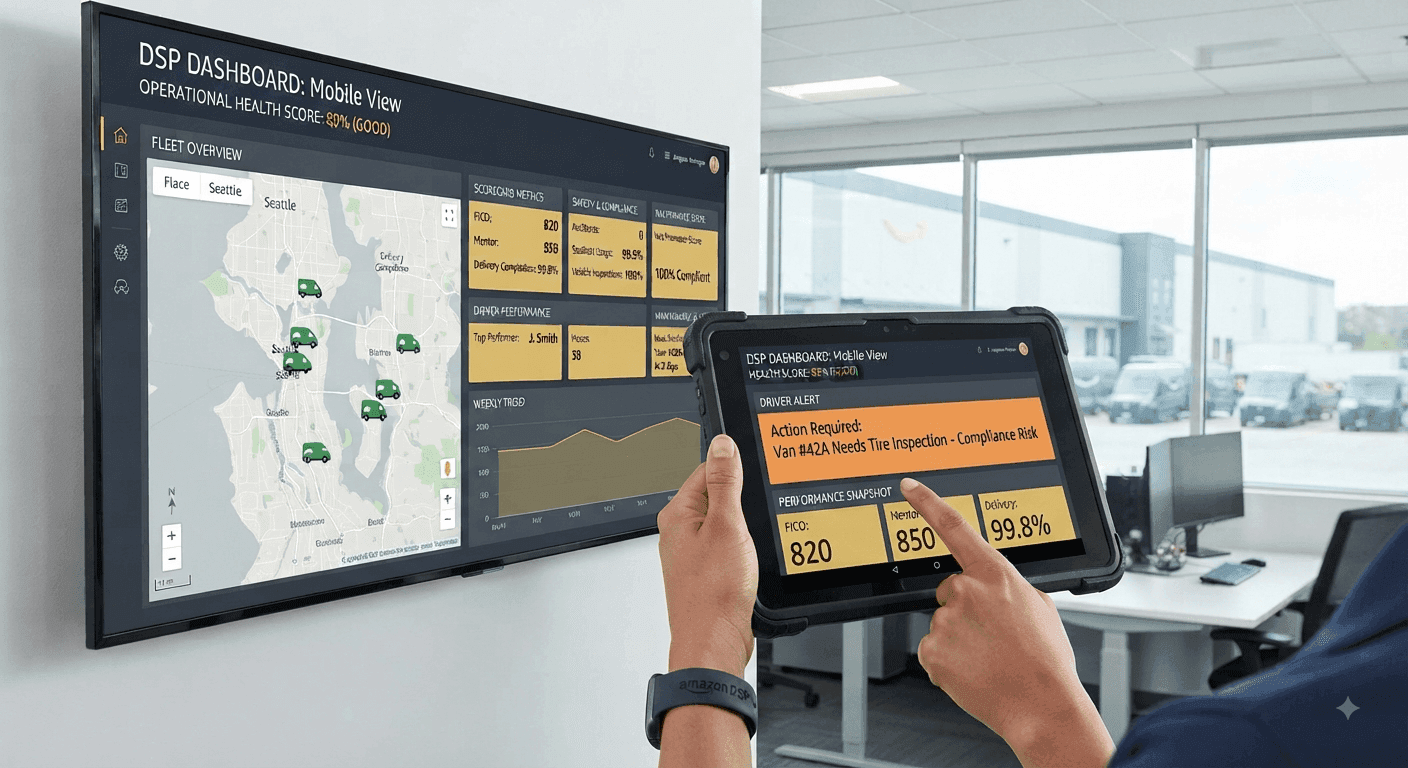
Cooriroo gives DSP owners that visibility in one place, consolidating driver performance, compliance tracking, and operational data so nothing surfaces for the first time on a scorecard. Ready to see what a consolidated operational view looks like for your fleet? Contact us now for a personalized demo.