Fleet Maintenance Log Software: Trends Shaping Uptime
Fleet Maintenance Log Software: Trends Shaping Uptime
Unexpected vehicle downtime disrupts more than a single route. It can trigger missed delivery windows, frustrated customers, overtime costs, replacement vehicle expenses, and safety risks. As delivery networks become faster and customer expectations rise, maintenance teams need more than spreadsheets, paper inspection forms, and disconnected repair records.
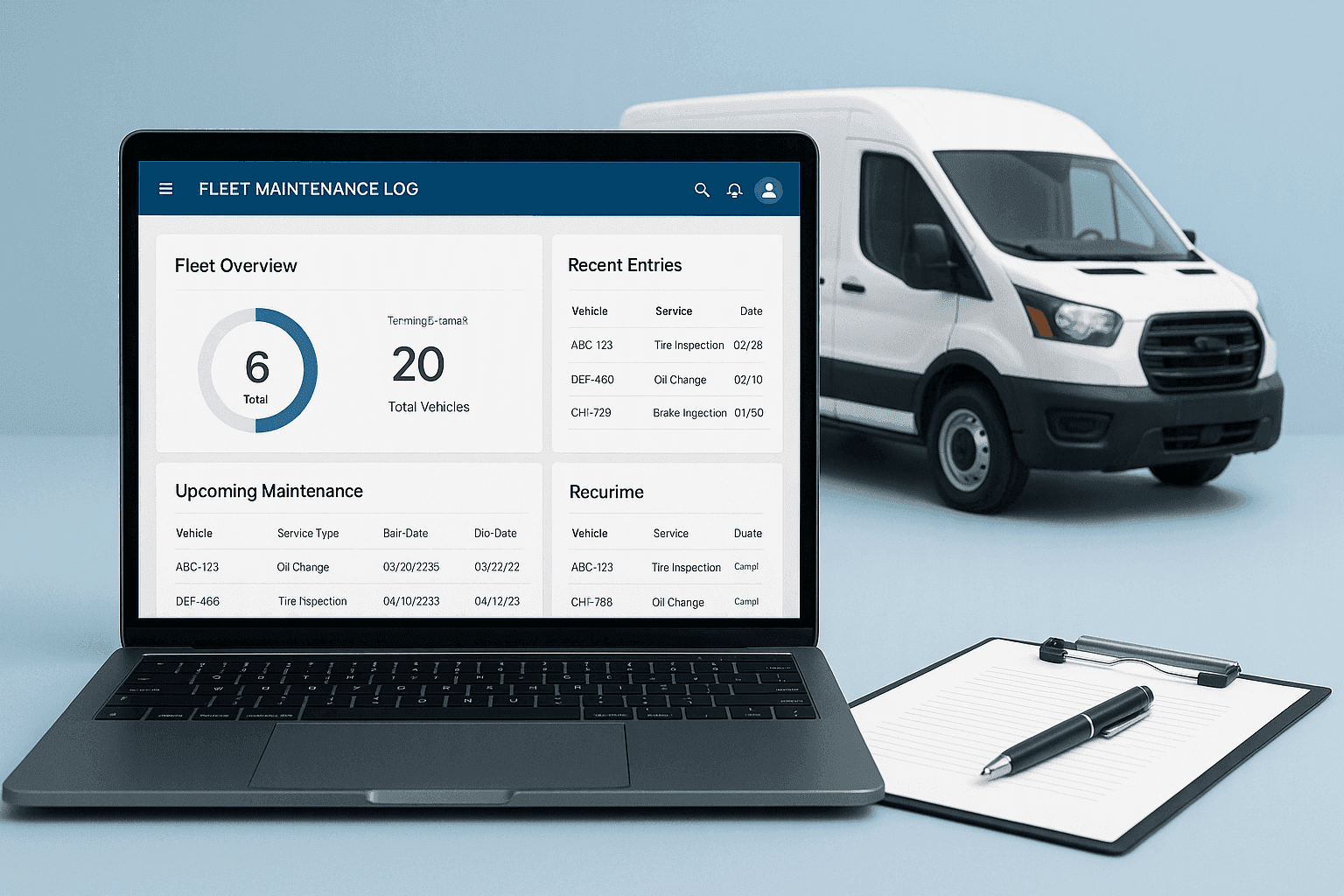
That is why fleet maintenance log software is becoming a core operational system for delivery fleets, service businesses, and transportation providers. Modern tools turn maintenance activity into usable data, helping managers identify issues earlier, schedule work intelligently, and keep every vehicle road-ready.
Below are the most important trends shaping fleet maintenance today, along with practical ways fleet operators can adapt.
Trend 1: Digital Maintenance Logs Are Replacing Paper Records
Paper vehicle logs and manual spreadsheets have long been familiar tools in fleet operations. However, they create a major visibility problem: information often sits in a driver cab, a maintenance office, or an inbox until someone has time to enter and review it.
Digital maintenance logs centralize that information. Drivers, technicians, dispatchers, and fleet managers can record inspections, defects, services, parts usage, and repair notes in one platform. This creates a searchable history for every asset.
Why centralized records matter
A complete maintenance record helps fleets answer critical operational questions quickly:
- When was the vehicle last serviced?
- Which defects were reported during the latest inspection?
- How often has a specific vehicle required repair?
- Which components are driving the most maintenance expense?
- Is a vehicle safe and compliant to assign to a route?
A robust fleet maintenance log software platform also creates accountability. Each inspection, defect report, work order, and completed repair can include timestamps, user details, photos, and notes. That documentation supports safer operations and makes audits far less stressful.
How fleets should adapt
Start by standardizing the data you collect. Create consistent defect categories, service types, vehicle statuses, and inspection checklists across the organization. If each team uses different terms for the same issue, reporting becomes unreliable.
Mobile access is equally important. Drivers should be able to complete pre-trip and post-trip inspections from a phone or tablet, while maintenance teams should receive defect notifications without waiting for paperwork to return to the yard.
Trend 2: Maintenance Scheduling Is Becoming More Proactive
The industry is moving away from a reactive maintenance model, where vehicles enter the workshop only after a breakdown or obvious failure. Reactive repairs can be expensive because they often occur under pressure, interrupt planned routes, and require rush parts or external labor.
Instead, fleets are adopting fleet maintenance scheduling software to plan preventive maintenance based on time, mileage, engine hours, or custom usage thresholds. These changes reflect broader maintenance tracking trends shaping fleet operations, where timely information is central to reducing downtime and controlling repair costs.
From calendar reminders to operational scheduling
Basic scheduling tools may send a reminder when an oil change is due. Modern systems go further by connecting maintenance due dates with real fleet activity. They can identify vehicles approaching service thresholds, flag overdue tasks, and help managers coordinate service around route availability.
For example, a delivery business can schedule a van's inspection while it is already expected to be at the depot. This reduces the chance that maintenance creates a last-minute dispatch problem.
Effective preventive maintenance schedules commonly include:
- Daily or shift-based vehicle inspections.
- Mileage- or hour-based oil and filter services.
- Tire condition, pressure, rotation, and replacement checks.
- Brake, lighting, steering, and suspension inspections.
- Seasonal checks for cooling, batteries, HVAC, and wiper systems.
- Compliance inspections required by local transport regulations.
The business impact of prevention
Preventive maintenance cannot eliminate every failure, but it gives fleets more control over risk. Catching a worn tire, fluid leak, brake concern, or battery issue before it becomes a roadside event protects both asset availability and driver safety.
The strongest programs also use maintenance data to plan capacity. If several vehicles are due for service in the same week, fleet managers can stagger appointments, reserve spare vehicles, and protect delivery coverage.
Trend 3: Inspection Data Is Driving Faster Repair Decisions
Vehicle inspections are becoming more connected to the repair workflow. Rather than treating driver vehicle inspection reports as standalone compliance forms, forward-looking fleets use them as the starting point for maintenance action.
When a driver identifies a defect, the right system should route that issue to the relevant maintenance team, assign a priority, and track the vehicle until the issue is resolved. This reduces the risk that a reported problem gets lost in a text message, paper stack, or verbal handoff.
Building a closed-loop defect process
A practical defect workflow looks like this:
- A driver completes a pre-trip or post-trip inspection.
- The driver records a defect with notes, photos, and severity details.
- The system alerts the appropriate manager or technician.
- The vehicle is marked available, restricted, or out of service based on the defect.
- A work order is created and assigned.
- The repair is documented, reviewed, and closed.
- The maintenance history updates automatically.
This closed-loop approach makes a maintenance log useful in real time, not just as an archive.
Prioritization protects uptime
Not every defect requires the same response. A damaged mirror, warning light, tire issue, or brake concern can have very different safety and operational implications. Fleet maintenance teams need clear rules for identifying defects that require immediate action versus items that can be scheduled.
Use customizable severity levels, vehicle status controls, and escalation alerts. The goal is to prevent a critical defect from being dispatched while avoiding unnecessary downtime for minor issues.
Trend 4: Fleet Maintenance Repair Software Is Connecting Workshops and Dispatch
Maintenance operations have historically been separated from dispatch. Dispatch wants vehicles available, while technicians need sufficient time and parts to complete quality repairs. Without shared visibility, this tension can lead to rushed work, poor assignments, and avoidable downtime.
Fleet maintenance repair software helps bridge the gap by providing shared information about vehicle condition, repair status, labor activity, and expected return-to-service dates. This broader connection between operational teams is also central to vehicle management software trends focused on cost control, safety, and reliable service.
Better work orders, better repair visibility
Digital work orders create a clear record of the repair process. A technician can document the reported issue, diagnosis, labor, parts, outside vendor costs, and completion details. Managers can then review the total cost and recurring patterns by vehicle or component.
For dispatchers, the key benefit is vehicle status visibility. They can see whether a vehicle is:
- Available for assignment
- Scheduled for service
- Awaiting diagnosis
- In repair
- Awaiting parts
- Out of service
- Cleared and ready to return
This information supports smarter route planning and prevents teams from assigning a vehicle that is unavailable or unsafe.
Integrating parts and vendor management
Repair workflows are also becoming more connected to inventory and vendor management. When a common part is unavailable, a vehicle may sit idle longer than necessary. Tracking stock levels, reorder points, purchase history, and vendor performance helps maintenance teams reduce delays.
For fleets that use outside repair shops, the system should capture estimates, invoices, repair details, and turnaround time. Over time, this data helps managers compare vendors and identify whether certain repairs should move in-house.
Trend 5: Maintenance Analytics Are Shifting From Reporting to Decision-Making
Maintenance software produces value when teams use the data to make operational decisions. A dashboard alone is not enough. Fleet leaders need reports that reveal cost trends, recurring failures, compliance gaps, and opportunities to improve asset utilization.
Metrics that deserve attention
Every fleet has different priorities, but these maintenance metrics provide a useful foundation:
- Vehicle downtime: Total time assets are unavailable for service.
- Preventive maintenance compliance: Percentage of scheduled services completed on time.
- Maintenance cost per vehicle: Total maintenance spending by asset.
- Maintenance cost per mile or kilometer: A normalized view of repair and service costs.
- Repeat repairs: Issues that return after a repair is completed.
- Inspection defect rate: Frequency and type of driver-reported defects.
- Mean time to repair: Average duration between repair opening and closure.
- Cost by component: Spending on tires, brakes, batteries, engines, and other systems.
These metrics help identify patterns that are easy to miss in individual records. For instance, repeated tire repairs may point to route conditions, driver behavior, incorrect tire specifications, or inconsistent pressure checks. Rising maintenance cost on one vehicle could signal that replacement planning should begin.
Use data with context
It is important not to judge every vehicle solely by total repair cost. Older vehicles, high-mileage assets, heavy-duty routes, and specialized equipment naturally have different maintenance profiles.
Compare assets with similar age, duty cycle, mileage, and operating conditions. This creates more meaningful benchmarks and helps fleet managers decide whether to repair, reassign, retire, or replace an asset.
Trend 6: Connected Fleet Data Is Improving Maintenance Timing
Telematics, GPS, engine data, fuel data, and maintenance records are increasingly used together. When systems are connected, maintenance teams gain a more complete picture of how vehicles are being used and where risks may be developing.
For example, telematics data may reveal excessive idling, harsh braking, high engine temperatures, battery voltage concerns, or unusual fuel consumption. These signals do not replace inspections or technician expertise, but they can help teams investigate problems earlier. The value of combining this operational information is also clear in vehicle tracking system software trends for 2026.
A practical approach to connected maintenance
Avoid adding technology simply because it is available. Focus on integrations that solve a clear operational problem, such as:
- Automatically updating odometer readings for service schedules.
- Creating alerts when vehicles reach maintenance thresholds.
- Matching vehicle availability with dispatch planning.
- Linking reported defects to work orders.
- Reviewing route conditions alongside tire or suspension repair patterns.
The best technology stack reduces duplicate data entry. It should make the correct action easier for drivers, technicians, dispatchers, and managers.
Trend 7: Mobile-First Workflows Are Becoming Essential
Fleet maintenance does not happen behind a desk. Drivers inspect vehicles in yards and at customer sites. Technicians move between bays. Dispatch teams make fast decisions throughout the day.
As a result, mobile-first maintenance tools are now essential rather than optional. Users need to submit inspections, attach photos, receive alerts, update work orders, and check vehicle status from wherever work happens.
What to look for in fleet maintenance software
When evaluating a platform, prioritize usability alongside features. A complicated system can lead to incomplete inspections, inconsistent records, and poor adoption.
Look for capabilities such as:
- Customizable digital inspection forms
- Mobile defect reporting with photo attachments
- Automated maintenance reminders
- Service schedules based on mileage, time, or engine hours
- Work order management and repair history
- Vehicle status tracking for dispatch visibility
- Maintenance cost reporting
- Role-based permissions and audit trails
- Integration options for telematics, GPS, and route operations
Looking Ahead: Maintenance Will Be a Strategic Fleet Advantage
The future of maintenance is not simply about digitizing old records. It is about creating a connected operating model where inspections, scheduling, repairs, vehicle status, and cost data work together.
Fleets that adopt fleet maintenance log software can move from reacting to breakdowns toward managing maintenance as a strategic function. They can protect driver safety, improve service reliability, reduce avoidable downtime, and make stronger decisions about every asset in their operation.
Cooriroo helps delivery and fleet operators bring operational visibility into one place. Explore how a connected platform can support maintenance coordination, vehicle readiness, route execution, and better day-to-day fleet decisions.