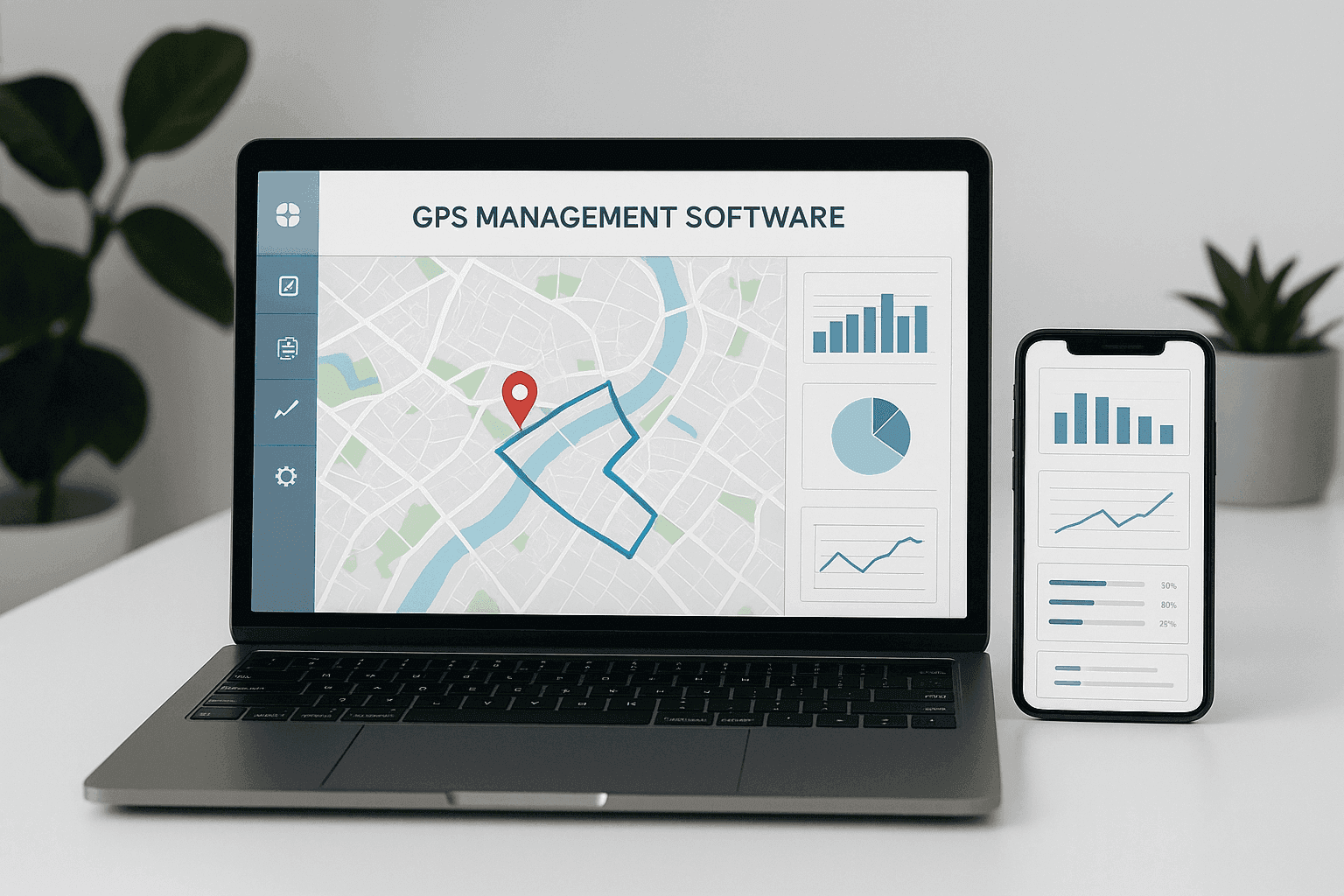
Best GPS Fleet Management System: What to Look For
Best GPS Fleet Management System: What to Look For
Finding the best GPS fleet management system is no longer simply about seeing vehicle locations on a map. For delivery businesses, field service operators, and transport fleets, GPS technology has become a source of operational intelligence.
The right platform can help managers dispatch faster, reduce unauthorized mileage, improve driver safety, control fuel spending, and keep customers informed. The wrong one can create more administrative work, overwhelm teams with alerts, and leave valuable vehicle data unused.
As delivery expectations tighten and operating costs remain unpredictable, fleet operators need GPS fleet management software that turns location data into decisions. Here is what to evaluate, which industry trends matter, and how to choose a system that can support long-term growth.
GPS Tracking Is Becoming an Operations Platform
Traditional vehicle tracking answered a basic question: where is the truck right now? Modern GPS fleet management systems answer much more important questions:
- Which driver can complete the next job fastest?
- Which routes create excess mileage or repeated delays?
- Which vehicles are idling too long?
- Which drivers may need coaching after harsh braking or speeding events?
- Which deliveries are likely to miss their promised time window?
- When should a vehicle be scheduled for preventative maintenance?
This shift matters because a fleet’s largest costs are rarely isolated. Fuel consumption, maintenance expenses, labor hours, customer service issues, and vehicle downtime affect one another. A connected fleet platform brings these data points together so managers can identify the root cause of poor performance instead of reacting to individual problems.
For example, excessive idling is not just a fuel issue. It may point to inefficient route planning, long customer wait times, poor loading processes, or dispatch decisions that send drivers to stops too early. The best GPS fleet management system gives teams the context needed to act on those patterns. For a closer look at this evolution, see these GPS management software trends transforming fleets.
Trend 1: Real-Time Visibility Must Lead to Faster Decisions
Real-time vehicle visibility remains the foundation of fleet management, particularly for last-mile delivery and on-demand service operations. Dispatchers need to see active vehicles, planned routes, stop status, and estimated arrival times from one operational view.
However, visibility alone does not improve fleet performance. The value comes from using live GPS data to make informed adjustments during the day.
What effective real-time tracking should include
Look for a platform that provides:
- Live vehicle locations with frequent, reliable updates
- Route progress and stop-completion status
- Estimated times of arrival based on current conditions
- Geofences for depots, customer locations, service areas, and restricted zones
- Alerts for route deviation, late arrivals, extended stops, and unauthorized use
- A mobile driver app that supports job updates and proof of delivery
For delivery operators, real-time exceptions are especially important. A dispatcher should not need to call each driver to discover that a delivery failed, a customer was unavailable, or a vehicle has been delayed by traffic. The system should surface the exception quickly and make the next best action clear.
How fleets should adapt
Build practical workflows around GPS alerts. Start with a small number of high-value notifications, such as late-start alerts, excessive idle events, geofence arrivals, and route deviations. Too many alerts can cause teams to ignore the issues that deserve attention.
Managers should also define who owns each exception. If a customer delivery is at risk, for example, the dispatcher may reroute the job while customer service sends an updated ETA. Clear ownership turns GPS data into better service.
Trend 2: Route Optimization Is Essential for Cost Control
Fuel, wages, vehicle wear, and customer expectations all make inefficient routes expensive. Even small improvements in daily travel distance or drive time can add up across dozens of vehicles and hundreds of stops.
Route optimization software uses delivery addresses, driver capacity, service windows, vehicle types, and operational constraints to build more efficient routes. When connected to GPS tracking, it also helps dispatchers compare planned routes with actual performance.
Features to prioritize for route planning
The best GPS fleet management system should support more than point-to-point navigation. Look for:
- Multi-stop route optimization for delivery and service routes.
- Time-window planning to meet customer commitments.
- Capacity and vehicle constraints for weight, volume, equipment, or temperature-controlled loads.
- Territory planning to reduce overlap between drivers.
- Dynamic route updates when urgent work or delays occur.
- Planned versus actual route reporting to identify recurring inefficiencies.
A strong route optimization workflow can reduce manual planning time while giving drivers realistic, sequenced workloads. It can also help businesses avoid a common problem: assigning jobs based on habit rather than proximity, capacity, and available time.
The operational implication
Fleet managers should treat route planning as a daily feedback loop. Review where drivers consistently arrive late, where routes run over capacity, and where service times differ from estimates. Then use those findings to improve territories, appointment windows, and driver schedules.
The goal is not to force drivers to follow a rigid route at all costs. It is to create a plan that reflects real operating conditions and can adapt when conditions change.
Trend 3: Driver Safety Data Is Moving From Compliance to Coaching
GPS fleet management systems increasingly combine location data with driving behavior data. Speeding, harsh acceleration, harsh braking, sharp cornering, seat belt status, and mobile device use can all indicate risk, depending on the hardware and software configuration.
Safety monitoring is valuable because collisions are costly beyond vehicle repairs. They can disrupt service, raise insurance costs, create legal exposure, damage a company’s reputation, and put people at risk.
What to look for in driver safety tools
Useful driver safety capabilities include:
- Configurable speeding thresholds based on posted limits or company policy
- Driver scorecards that show patterns over time
- Event video or dash camera integration where appropriate
- In-cab alerts for high-risk behavior
- Coaching workflows and documented follow-up actions
- Recognition tools for safe driving performance
The most effective programs avoid using telematics as a purely punitive tool. Instead, managers should review trends, verify the context of events, and use one-to-one coaching to address repeat behavior.
How businesses should adapt
Explain the purpose of the technology before deployment. Drivers are more likely to support GPS tracking when leadership clearly communicates that the program is designed to improve safety, protect drivers, improve route fairness, and reduce operational friction.
Create a written policy covering data use, privacy expectations, coaching procedures, and escalation steps. Consistent policies help establish trust while ensuring managers use the platform fairly.
Trend 4: Vehicle Maintenance Is Becoming More Predictive
Unplanned vehicle downtime can quickly derail a delivery operation. A vehicle that fails mid-route can trigger missed stops, overtime, customer complaints, recovery costs, and lost revenue.
Modern fleet tracking platforms can support preventative maintenance by combining mileage, engine hours, diagnostic trouble codes, inspection records, and service schedules. Instead of waiting for a breakdown, managers can schedule maintenance based on actual vehicle use and emerging issues.
Maintenance capabilities that matter
When comparing fleet management software, evaluate whether it can:
- Track mileage, engine hours, and service intervals
- Capture driver vehicle inspection reports
- Flag fault codes and maintenance alerts
- Maintain service histories by vehicle
- Assign maintenance tasks and track completion
- Report on downtime, repair frequency, and maintenance costs
A maintenance dashboard should help managers prioritize work. A warning light on one vehicle may be less urgent than a repeated fault code on a high-utilization delivery van scheduled for a full day of customer stops. For more on replacing manual records with preventive schedules and centralized service data, explore free vehicle maintenance tracking software in 2026.
The business impact
Preventative maintenance supports both cost control and customer reliability. Reliable vehicles keep routes on schedule, while complete maintenance records help fleet teams make better replacement and lifecycle decisions.
Trend 5: Customer Delivery Visibility Is Now a Competitive Advantage
Customers increasingly expect accurate ETAs, status updates, and proof that a delivery was completed. For many businesses, delivery communication is no longer an optional service feature; it is part of the customer experience.
GPS fleet management data can power customer-facing notifications without forcing dispatchers to manually answer every “where is my order?” call.
Important customer experience features
For delivery-focused fleets, consider a system that supports:
- Automated dispatch and delivery notifications
- Live or limited customer tracking links
- Accurate ETA updates
- Digital proof of delivery, including signatures, photos, notes, or barcode scans
- Failed-delivery reason codes
- Delivery history that customer service teams can access quickly
These features reduce inbound support pressure while providing customers with more confidence in the delivery process. They also create an auditable delivery record when disputes occur.
How to Choose the Best GPS Fleet Management System
The best system is not necessarily the platform with the longest feature list. It is the one that fits your fleet’s workflows, integrates with your existing tools, and gives managers actionable data without creating unnecessary complexity.
Use this evaluation checklist
Before selecting a provider, assess the following areas:
| Evaluation area | Questions to ask | | --- | --- | | Fleet fit | Does the platform support your vehicle types, service model, and fleet size? | | GPS accuracy | How frequently is location data updated, and how reliable is coverage? | | Dispatch | Can dispatchers assign, reassign, and monitor work in real time? | | Routing | Does it optimize multi-stop routes and account for real business constraints? | | Driver experience | Is the driver app easy to use during a busy shift? | | Safety | Can you configure alerts, scorecards, coaching, and camera integrations? | | Maintenance | Does it support inspections, service schedules, and diagnostic data? | | Reporting | Can you measure utilization, idling, on-time delivery, and route performance? | | Integrations | Does it connect with order management, accounting, ERP, CRM, or payroll systems? | | Support and scalability | Can the provider support implementation, training, and future growth? |
Consider total cost, not just subscription price
A low monthly software fee can become expensive if the platform requires extensive manual work, lacks crucial integrations, or cannot scale with your fleet. Calculate the total cost of ownership, including hardware, installation, onboarding, training, support, data plans, and contract terms.
Then estimate the operational value. Potential gains may come from reduced idle time, fewer empty miles, lower overtime, faster dispatching, improved maintenance planning, better delivery completion rates, and fewer customer service calls. When comparing providers, it can help to review how fleet software options differ in telematics, dispatch, delivery management, and connected workflows.
Build a Better Fleet With Connected Data
The best GPS fleet management system gives logistics teams more than a map. It connects drivers, dispatchers, vehicles, customers, and operational data in one coordinated workflow.
As fleet technology evolves, the strongest operators will use GPS insights to plan proactively rather than respond after service problems occur. Start by identifying your most costly operational challenges, whether that is late delivery, inefficient routing, weak vehicle utilization, safety risk, or limited customer visibility.
Cooriroo helps delivery and fleet teams manage routes, dispatch work, track progress, and improve operational control from a modern logistics platform. Explore how connected fleet management tools can help your operation deliver more efficiently, keep customers informed, and scale with confidence.