Dedicated Driver Outsourced Fleet Management Trends

Dedicated Driver Outsourced Fleet Management Trends
Delivery businesses face a difficult balancing act: customers expect fast, precise service, while operating costs, driver shortages, and compliance requirements keep rising. Building an in-house fleet can provide control, but it also requires major investment in vehicles, recruitment, insurance, scheduling, maintenance, and technology.
That is why dedicated driver outsourced fleet management is becoming an increasingly important operating model. Rather than relying only on ad hoc carriers or managing every fleet function internally, businesses can secure dedicated drivers and vehicles through an outsourced partner while retaining control over delivery standards, customer experience, and service coverage.
This model is evolving quickly. Technology, changing labor expectations, sustainability targets, and demand for real-time delivery information are reshaping how organizations manage outsourced transport capacity. Here are the major trends driving the future of dedicated fleet operations and how delivery businesses can respond.
Dedicated Capacity Is Replacing Purely Transactional Delivery
For years, many businesses used spot-market carriers to cover deliveries as needed. This approach can work for irregular volumes, but it often creates uncertainty. Capacity may disappear during peak periods, rates can fluctuate, and service quality can vary between drivers and providers.
Dedicated driver outsourcing offers a more stable alternative. A delivery provider assigns drivers, vehicles, and operational support to a specific business or route network for an agreed period. The fleet may operate under the customer's brand, use customer-defined service processes, and follow agreed performance targets.
Why dedicated fleets are gaining attention
A dedicated arrangement gives operators more predictable access to delivery resources without requiring them to own and employ every asset directly. It can be especially valuable for businesses with consistent delivery demand, defined service areas, or customer-facing delivery requirements.
Key advantages include:
- More reliable driver and vehicle availability
- Greater consistency in customer service
- Better route familiarity and local delivery knowledge
- Clearer accountability for delivery performance
- Reduced internal administrative burden
- Easier scaling compared with purchasing fleet assets
The shift is not simply about outsourcing costs. It is about protecting delivery capacity while preserving a consistent operating model. For businesses where delivery quality affects customer retention, a dedicated fleet can provide more control than a traditional on-demand carrier network.
Real-Time Visibility Is Becoming a Contract Requirement
Delivery visibility has moved from a competitive advantage to a core expectation. Operations teams need to know where drivers are, which stops are at risk, whether routes are running behind schedule, and how quickly exceptions can be resolved.
In modern dedicated driver outsourced fleet management, visibility should not sit only with the outsourcing provider. The client business needs access to useful, real-time operational data through a shared platform or integrated dashboard, reflecting broader vehicle tracking system software trends.
The data that matters most
Not every fleet metric improves decisions. The most valuable data helps dispatchers, managers, and customer service teams act before a small delay becomes a missed delivery.
Businesses should prioritize visibility into:
- Driver location and route progress
- Estimated time of arrival updates
- Planned versus actual arrival times
- Completed, failed, and rescheduled deliveries
- Proof of delivery, including signatures or photos
- Driver breaks, vehicle status, and route exceptions
- Customer notifications and communication history
A platform such as Cooriroo can centralize orders, routes, drivers, customer updates, and proof-of-delivery records in one workflow. This is particularly important when outsourced drivers operate alongside internal teams, third-party carriers, or multiple delivery hubs.
Without shared visibility, outsourced fleet management can become reactive. With shared data, teams can coordinate quickly, improve customer communication, and make performance discussions more objective.
Hybrid Fleet Models Are Expanding
The question is no longer whether to outsource every delivery or own every vehicle. Many businesses are choosing hybrid models that combine internal capability with dedicated outsourced drivers, overflow carriers, and specialist transport providers.
This approach allows fleet managers to match the right resource to the right work. Internal drivers may cover strategic routes, high-value customers, or sensitive goods, while outsourced dedicated teams support regional density, seasonal growth, or new market launches.
When a hybrid model makes sense
A hybrid fleet can be a strong fit when delivery demand varies by location, customer segment, or time of year. For example, a retailer may maintain a core internal fleet for metro deliveries while using dedicated outsourced vehicles to serve outer suburbs or regional areas.
The model can also reduce risk during growth. Instead of buying vehicles and hiring a full driver team before demand is proven, businesses can launch with outsourced capacity and adjust the operating model as order volumes stabilize.
To make hybrid delivery operations work, businesses need one source of truth for dispatching and performance. Separate systems, manual spreadsheets, and disconnected driver apps can make it impossible to compare internal and outsourced fleet performance fairly.
Compliance and Safety Oversight Are Moving Upstream
Outsourcing fleet work does not remove compliance responsibility. Depending on the jurisdiction, the business engaging a transport provider may still have obligations related to safety, chain of responsibility, vehicle suitability, worker conditions, and recordkeeping.
As a result, leading businesses are strengthening their outsourced fleet governance. They no longer assess providers only on price and vehicle availability. They evaluate safety processes, driver qualifications, incident reporting, insurance coverage, fatigue management, and maintenance controls before work begins.
Build compliance into the operating model
A dedicated fleet agreement should clearly define responsibilities. Vague arrangements can create operational gaps, particularly when an incident, customer complaint, or delivery dispute occurs.
A practical governance framework should cover:
- Driver onboarding: Verify licences, training, background checks, customer-service requirements, and site access needs.
- Vehicle standards: Set requirements for vehicle type, branding, maintenance, load restraint, refrigeration, or safety equipment where relevant.
- Operational procedures: Document pickup rules, delivery windows, failed-delivery processes, returns handling, and escalation pathways.
- Incident management: Establish who reports incidents, how evidence is recorded, and when customers or regulators must be notified.
- Audit cadence: Review compliance records and operating performance regularly rather than only at contract renewal.
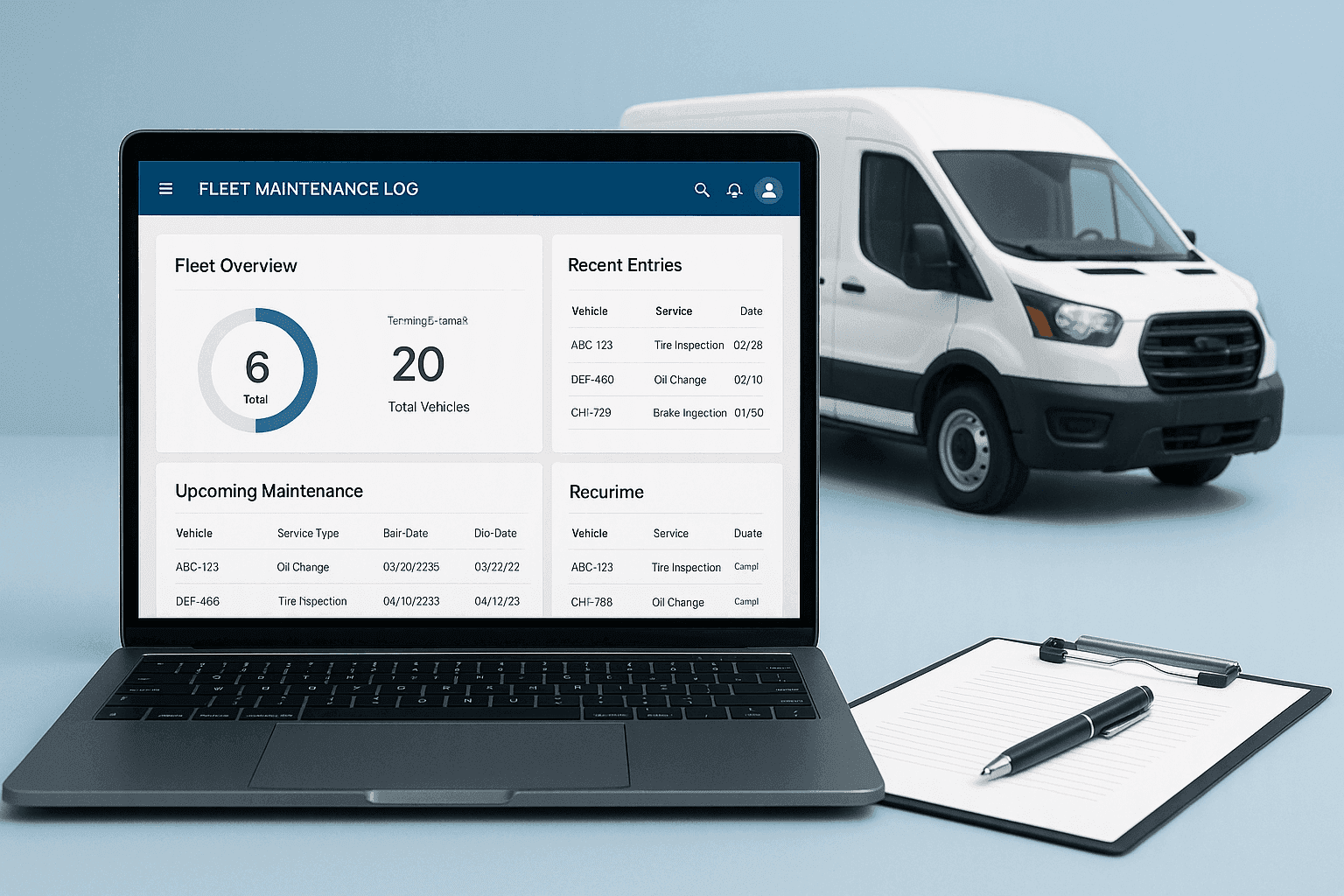
Technology can support these controls by creating digital delivery records, driver checklists, time-stamped proof of delivery, and exception logs. Effective maintenance tracking can also help make good operational practice easier to follow and verify.
Customer Experience Is Now a Fleet Performance Metric
Customers rarely distinguish between a retailer, distributor, or service company and its delivery partner. They judge the entire brand experience based on whether the delivery arrives on time, in good condition, and with clear communication.
That makes customer experience a central issue in dedicated driver outsourced fleet management. A driver may be employed by a fleet partner, but they often represent the client business at the doorstep, loading dock, or job site.
Standardizing the delivery experience
Dedicated drivers can provide a stronger branded experience than rotating carrier capacity because they become familiar with products, customers, delivery routes, and service expectations. However, businesses must actively support that consistency.
Useful standards include:
- Branded uniforms or vehicle presentation where appropriate
- Customer-service training and delivery etiquette
- Clear communication scripts for delays or failed deliveries
- Digital proof-of-delivery procedures
- Defined rules for handling damaged goods or returns
- Escalation contacts for high-priority customers
Customer notifications also matter. Automated messages with delivery windows, live tracking links, and completion confirmation can reduce inbound support calls while giving recipients more confidence in the process.
Performance Management Is Becoming More Collaborative
Traditional outsourcing relationships often focused on monthly invoices and broad service-level agreements. Today, high-performing partnerships depend on more frequent, data-led conversations.
The most useful outsourced fleet reviews look beyond total delivery volume. They examine operational causes: Did traffic patterns affect on-time performance? Are certain delivery zones producing repeated failed stops? Do loading delays at a depot create downstream route failures? Are route plans realistic for vehicle capacity and service times?
Core KPIs for a dedicated outsourced fleet
Every operation has different priorities, but a practical scorecard often includes:
- On-time pickup and delivery rate
- First-attempt delivery success rate
- Cost per completed delivery or route
- Route completion rate
- Failed-delivery and reattempt rate
- Customer complaint rate
- Proof-of-delivery completion rate
- Vehicle utilization and capacity use
- Safety incidents and near misses
- Driver retention and attendance trends
Avoid treating metrics as punishment tools. A KPI dashboard should support continuous improvement. When both parties can see the same operational information, they can identify root causes and test practical changes, such as route redesign, revised cutoff times, better delivery instructions, or additional peak-period support.
Flexible Scaling Is Critical for Peak Demand
Seasonal surges, promotions, weather events, and changing customer habits can all create rapid swings in delivery volume. A fixed fleet may struggle to absorb demand spikes, while a fully variable carrier model may become expensive or unreliable during peak periods.
Dedicated outsourced fleets provide a middle path. Businesses can establish a core team of drivers and vehicles, then define options for additional capacity when volume thresholds are reached. The important part is planning those triggers before the peak begins.
Prepare capacity before demand arrives
Fleet managers should use historical delivery data to identify predictable patterns by day, week, location, and customer type. Even a simple volume forecast can improve driver scheduling and vehicle allocation.
Before a peak period, agree on:
- Expected volume ranges and delivery windows
- Reserve driver and vehicle availability
- Peak-period pricing or minimum commitments
- Depot loading and dispatch processes
- Customer communication rules for delays
- Escalation contacts and decision authority
A delivery management platform can help teams monitor order intake against available route capacity in real time. This allows operations managers to intervene early rather than discovering capacity issues after orders have already been promised to customers.
Sustainability Is Influencing Fleet Sourcing Decisions
Environmental reporting requirements and customer expectations are increasing pressure on delivery operations to reduce emissions. Dedicated outsourced fleet providers are responding through electric vehicles, route optimization, alternative fuels, consolidated deliveries, and improved vehicle utilization.
For businesses evaluating a dedicated fleet partner, sustainability should be assessed in operational terms. An electric vehicle program may be valuable, but it must suit route distance, charging access, payload requirements, and daily dispatch schedules.
Practical ways to reduce delivery impact
Businesses can begin with improvements that support both sustainability and cost control:
- Increase stop density through better territory design
- Reduce empty running and unnecessary return trips
- Optimize routes based on live conditions and delivery constraints
- Match vehicle size to load and route requirements
- Offer customers realistic delivery windows that support consolidation
- Track fuel, idling, mileage, and utilization data
The strongest sustainability strategies connect emissions goals to daily fleet decisions. Better route planning and higher first-attempt delivery rates can reduce both operational waste and environmental impact.
How Businesses Should Adapt Now
The future of outsourced fleet management is not hands-off. It requires clear service design, shared technology, active governance, and a partnership mindset.
Start by mapping your current delivery network. Identify which routes require consistent drivers, which locations experience capacity shortages, where customer service is most important, and which internal tasks consume the most operational time. Then assess whether dedicated outsourced capacity could improve reliability without reducing control.
When selecting a provider, look beyond the hourly or per-route rate. Evaluate their driver quality, safety systems, technology integrations, local coverage, contingency capacity, and willingness to share performance data. Strong vehicle management software can support these decisions. The lowest-cost option can become expensive if it creates failed deliveries, customer churn, or constant operational firefighting.
The Future of Dedicated Driver Outsourced Fleet Management
Dedicated driver outsourced fleet management is becoming a strategic tool for businesses that need dependable delivery capacity without carrying the full cost and complexity of an owned fleet. The most successful models combine the consistency of dedicated drivers with the flexibility of outsourced operations and the control of connected fleet technology.
As customer expectations rise, businesses need more than vehicles on the road. They need reliable data, accountable partners, optimized routes, and a clear view of every delivery from dispatch to proof of completion.
Cooriroo helps delivery teams coordinate drivers, manage routes, track progress, and improve customer communication from one platform. If you are building a more scalable dedicated fleet model, explore how connected delivery management can help you turn outsourced capacity into a competitive advantage.